
If you struggle with breakouts and sun protection, finding the right sunscreen can feel impossible. Many formulations clog pores or leave an uncomfortable shine. However, three specific options in 2026 finally solve this dilemma. These dermatologist-recommended sunscreens provide effective, matte, and non-irritating protection. What makes them reliable for your sensitive, acne-prone skin starts with their unique, non-comedogenic ingredients.
Neutrogena Clear Face Sunscreen SPF 50, 3 oz
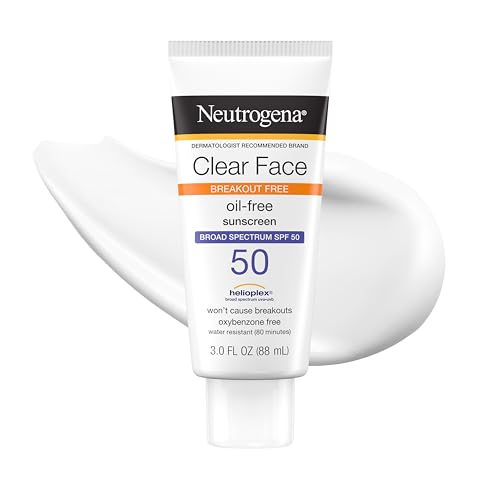
- Designed for acne-prone skin: Broad spectrum SPF 50 facial sunscreen formulated for oily and sensitive skin and reliable UVA/UVB protection while...
- Clear Face formula: Non-comedogenic daily face sunscreen with a lightweight, oil-free texture that absorbs quickly, feels breathable, and is...
- Sunscreen that won't cause breakouts: Oil-free and oxybenzone-free facial sunscreen moisturizer designed to support consistent, daily sun protection...

Last update on 2026-09-15 / Affiliate links / Images from Amazon Product Advertising API
Dealing with oily, acne-prone skin? You need a daily sunscreen that won’t cause breakouts. Neutrogena Clear Face Sunscreen SPF 50 is your best bet.
This sunscreen is oil-free, fragrance-free, and free of oxybenzone. It uses Helioplex technology for strong, stable sun protection. The formula is lightweight and dries to a matte finish. It lets your skin breathe without clogging pores. It also resists water for up to 80 minutes. That makes it a good choice for outdoor activities.
Over 8,600 reviews give it a solid 4.6 rating. This travel-sized lotion helps prevent sun damage and reduces irritation. It supports your goal of clear skin.
Best For: People with oily, acne-prone, or sensitive skin. You need a daily, non-comedogenic sunscreen with SPF 50 that won’t cause breakouts.
Pros:
- No oil, fragrance, or oxybenzone. This lowers the chance of irritation and breakouts.
- Lightweight with a matte finish. Your skin breathes and pores stay clear.
- Water-resistant for 80 minutes. Great for daily wear and outdoor activities.
Cons:
- The 3 oz bottle is small. You may need to buy it often for daily use.
- Can leave a slight white cast on deeper skin tones.
- May feel drying if you have dry or combination skin.
Eucerin Sun Clear SPF 50 for Acne-Prone Skin

- HSA ELIGIBLE/FSA ELIGIBLE SUNSCREEN: Includes one 2.5 fluid ounce bottle of Eucerin Sun Clear Skin Face Sunscreen SPF 50
- OILY SKIN CONTROL: Eucerin sunscreen enriched with 5 antioxidants (Glycyrrhetinic Acid, Licochalcone A, Vitamin E, Vitamin C, Oxynex ST) and...
- LIGHTWEIGHT SUNSCREEN WITH MATTE FINISH: Lightweight sunscreen for face provides an immediate, long-lasting matte finish, and suitable for daily...
Last update on 2026-08-28 / Affiliate links / Images from Amazon Product Advertising API
Eucerin Sun Clear SPF 50 for Acne-Prone Skin
If you have oily, acne-prone skin, this sunscreen is a great pick. It gives you a matte finish without feeling heavy or greasy. The formula absorbs oil and keeps shine away for hours. It works well under makeup.
This sunscreen has SPF 50 protection against UVA and UVB rays. It also has five antioxidants that fight free radicals and help your skin stay healthy.
The product is made by dermatologists. It is hypoallergenic and non-comedogenic. This means it will not clog your pores. It is also free of fragrance, dyes, parabens, and oxybenzone. These are things that can irritate sensitive skin.
The bottle is 2.5 ounces and comes with a pump. It is easy to carry and use every day.
Best For: People with oily, acne-prone skin who want a matte, non-greasy SPF 50 sunscreen that will not clog pores.
Pros:
- SPF 50 protection plus five antioxidants to fight free radicals.
- Lightweight and oil-absorbing. Gives a quick, long-lasting matte look. Great under makeup.
- Safe for sensitive skin. No fragrance, dyes, parabens, or oxybenzone. Will not clog pores.
Cons:
- Not hydrating enough if you have dry or combination skin.
- Small bottle for the price compared to other sunscreens.
- The pump can get clogged or squirt unevenly when the bottle is almost empty.
La Roche-Posay Anthelios Clear Skin SPF 60

- Face sunscreen for oily skin with broad spectrum SPF 60 protection; Sunscreen absorbs pore clogging oil, even in heat and humidity; Formulated with...
- This daily face sunscreen provides advanced protection while absorbing pore-clogging oil. Our best sunscreen for acne prone skin is formulated with...
- Non-comedogenic sunscreen for sensitive skin provides broad spectrum protection. Oil-free sunscreen for acne prone skin helps absorb excess oil...
Last update on 2026-08-28 / Affiliate links / Images from Amazon Product Advertising API
Oily and acne-prone skin needs a sunscreen that does two jobs. This one delivers.
It is oil-free and offers broad-spectrum protection. The Cell-Ox Shield technology guards your skin against UVA/UVB rays and pollution.
The dry touch finish works well. It soaks up extra oil and cuts down on shine. This makes it a great choice for hot, humid days.
It is non-comedogenic and has no fragrance. That means it will not cause breakouts or redness. It also leaves out Oxybenzone and Octinoxate.
The formula feels light and looks matte. It is a smart pick for your everyday routine.
Best For: People with oily, acne-prone, or sensitive skin. Anyone who wants a daily sunscreen that controls shine and does not clog pores.
Pros:
- Oil-free. Does not block pores. Absorbs oil and cuts shine for a matte look.
- SPF 60 blocks both UVA and UVB rays. Antioxidants also fight sun damage and pollution.
- No fragrance. Allergy tested. No Oxybenzone, Octinoxate, or parabens. Low risk of skin irritation.
Cons:
- May leave a white cast on darker skin tones because of mineral filters.
- Dry finish can feel too drying for normal or combination skin.
- Travel size may run out fast if you use it every day.
Factors to Consider When Choosing Sunscreen for Acne Prone Skin
When you’re choosing a sunscreen for acne-prone skin, you’ll want to prioritize oil-free formulations and non-comedogenic ingredients to avoid clogging your pores. You also need broad spectrum protection to guard against UVA and UVB rays, along with a lightweight, matte finish that won’t leave you greasy. Opt for fragrance-free options to minimize the risk of irritation, helping you maintain clear skin without compromising sun safety.
Oil-Free Formulations
Oil-free sunscreen works well for acne-prone skin. These products do not use pore-clogging oils. Instead, they use water or gel bases. This keeps your skin hydrated without feeling greasy. Many brands add ingredients like silica or dimethicone. These ingredients soak up extra oil during the day. Helpful to control shine. As a result, you get a matte finish. This finish helps stop too much sebum from sitting on your skin.
These sunscreens are tested to not block pores. So you can use them without worrying about new breakouts. An oil-free option keeps your skin’s oil in check. This leads to clearer, calmer skin under the sun.
Non-Comedogenic Ingredients
Non-comedogenic sunscreens do not clog pores. They are a good pick for acne-prone skin.
Check labels closely. The word “non-comedogenic” is not regulated. Companies can use it freely.
Avoid heavy oils, waxes, and silicones. These can block your hair follicles and cause breakouts.
Choose physical blockers like zinc oxide or titanium dioxide. They sit on top of your skin. They do not enter your pores.
Chemical blockers like avobenzone and octisalate are common too. But they need stabilizers to stay gentle.
Even with a non-comedogenic label, some ingredients can still cause pimples. Fragrance and alcohol are two examples.
Always patch-test a new sunscreen. Put a small amount on your jaw or arm. Wait a day to see if your skin reacts.
This careful choice helps you protect your skin without breaking out.
Broad Spectrum Protection
Choosing a sunscreen for acne-prone skin can feel tricky. Non-comedogenic labels help, but they don’t tell the full story. You need broad spectrum protection. This means it guards against both UVA rays (aging) and UVB rays (burning).
Sun exposure can inflame acne-prone skin, making breakouts worse. So look for the words “broad spectrum” on any bottle. This ensures it blocks a balanced range of harmful light.
Aim for SPF 30 or higher. SPF 30 blocks about 97% of UVB rays. Using it every day does more than prevent sunburn. It lowers your risk of skin cancer and premature aging. This is extra important if your skin is sensitive or damaged.
Don’t just check the SPF number. Double-check the label says “broad spectrum.” Good protection should never be sacrificed for a nicer texture. Pick a sunscreen that guards your skin fully, every time you go outside.
Lightweight, Matte Finish
Sunscreen can be tricky for skin that breaks out. A greasy formula often makes things worse. Pick a lightweight, matte finish sunscreen instead.
These sunscreens have special ingredients like silica or minerals. They soak up extra oil. Your face stays shine-free for hours, even in humidity. You won’t need to blot or powder your skin all day.
Look for words like “water-light” or “dry touch” on the bottle. These sunscreens spread in a thin, even layer. They won’t build up in your pores or cause more breakouts. Most are non-comedogenic, which means they don’t clog pores.
A matte finish sunscreen keeps your skin protected. It also keeps you shine-free and breakout-free all day long.
Fragrance-Free Options
Fragrance-free sunscreen is a smart choice for acne-prone skin. Artificial scents can cause inflammation and breakouts. They also harm your skin barrier. By choosing fragrance-free, you avoid common allergens like linalool and limonene. These ingredients often lead to contact dermatitis and make acne worse. A fragrance-free label means no synthetic fragrances were added. Some natural ingredients may still have a mild smell, but that’s okay. Fragrance is a top cause of skin reactions. It also clogs pores with volatile compounds. Switching to fragrance-free sunscreen helps you keep clearer skin. It stops unnecessary irritation. This is a safe, proven option for sensitive, acne-prone skin.
Sun Protection Factor
Choosing the right sunscreen is important. SPF number shows how well you block UVB rays. For acne-prone skin, pick at least SPF 30. It blocks about 97% of UVB rays. SPF 50 blocks about 98%, but no sunscreen blocks 100%. Higher numbers do not give you much more time in the sun. SPF 30 lets you stay in the sun about 30 times longer before you burn, compared to no sunscreen. Remember, SPF only measures UVB protection. You also need a “broad spectrum” label to block UVA rays. Reapply sunscreen every two hours. Also reapply after swimming or sweating. This keeps your protection strong and helps prevent breakouts from sun damage.
Water Resistance Duration
Sunscreen’s water resistance duration tells you how long it protects while you swim or sweat. Most sunscreens are labeled for 40 minutes or 80 minutes.
For acne-prone skin, choose the 80-minute option. It offers double the protection time. This means you have to reapply less often. Less reapplication leads to less product on your skin. That helps prevent clogged pores.
Remember: no sunscreen is fully waterproof. Even if the label says 80 minutes, you must reapply right after swimming or sweating. The FDA tests these claims with a standard method. So you can trust the label.
A water-resistant formula keeps your skin safe longer. It does this without piling on extra product.
Sensitive Skin Safety
Choosing a sunscreen for sensitive skin means checking the label. Skip products with fragrance, dyes, parabens, and oxybenzone. These can cause redness or rashes.
Look for “non-comedogenic” on the bottle. This means it won’t block your pores. That is helpful for acne-prone skin.
Pick a “hypoallergenic” formula. It helps lower the chance of skin irritation.
Both mineral and chemical sunscreens can work. Just make sure they avoid PABA and octinoxate. These are common irritants.
Try a sunscreen with antioxidants. They fight free radicals that can make skin more sensitive.
These steps keep your skin safe and help manage breakouts too.
Frequently Asked Questions
Can These Sunscreens Be Worn Under Makeup Without Pilling?
You’ll find these sunscreens work beautifully under makeup without pilling. They’re formulated with lightweight, non-comedogenic ingredients that absorb quickly, creating a smooth, invisible base for flawless application.
Do Any of These Sunscreens Contain Fragrance or Essential Oils?
You’ll find most of these sunscreens are fragrance-free and lack essential oils, specifically to avoid irritating acne-prone skin. You can check each label for a “fragrance-free” claim.
How Often Should I Reapply These if I Wear Face Masks?
You should reapply every two hours, even with a mask. Don’t skip it—masks don’t block UV rays. Use a powder sunscreen for easy touch-ups without disturbing your coverage.
Are These Sunscreens Safe for Rosacea-Prone or Sensitive Acne Skin?
You’re safe with these sunscreens for rosacea-prone or sensitive acne skin. They’re non-irritating, fragrance-free, and mineral-based, so they won’t clog pores or trigger flare-ups. Always patch-test first.
Will These Sunscreens Leave a White Cast on Deeper Skin Tones?
You’ll find these sunscreens leave minimal to no white cast on deeper skin tones. They’re formulated with finely milled minerals or chemical filters, so you won’t get that ghostly look.