
If you have super sensitive skin, finding a sunscreen that doesn’t sting, break you out, or leave a ghostly cast feels impossible. The options for 2026 narrow down to three mineral-based formulas that prioritize barrier protection. You’ll discover why Blue Lizard, Cetaphil, and CeraVe stand apart from the rest.
Blue Lizard Sensitive Mineral Sunscreen SPF 50
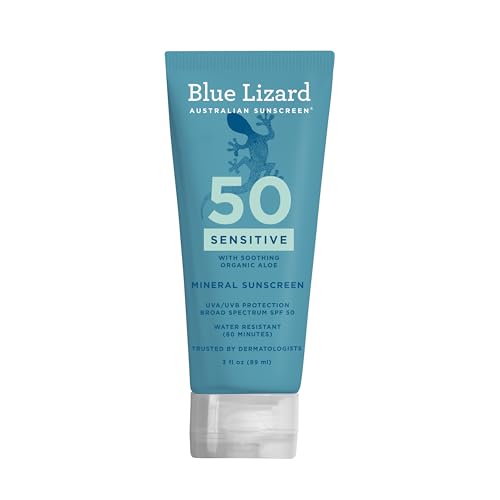
- POWERFUL MINERAL SUNSCREEN - Protect sensitive skin from the sun’s harmful rays with Blue Lizard Sensitive Mineral SPF 50 Sunscreen Lotion it...
- SPF 50 BROAD SPECTRUM PROTECTION - The water-resistant formula provides broad spectrum protection and helps protect skin from up to 98% of UVB rays.
- FORMULATED FOR SENSITIVE SKIN - Developed specifically for sensitive skin, the hypoallergenic formula is also paraben-free and fragrance-free.

Last update on 2026-09-05 / Affiliate links / Images from Amazon Product Advertising API
Blue Lizard Sensitive Mineral Sunscreen SPF 50 is made for people with skin that gets red or irritated from chemical sunscreens or smells. It uses Zinc Oxide and Titanium Dioxide to block 98% of UVB rays. It stays on for 80 minutes in water. The formula has no fragrance, no parabens, and no phthalates. It is hypoallergenic and safe for reefs. It does not have Oxybenzone or Octinoxate. Organic Aloe Vera helps calm your skin.
Who it is for: People with sensitive skin who want a mineral sunscreen that won’t hurt the ocean.
Good things:
- Uses Zinc Oxide and Titanium Dioxide to block most UVB rays.
- Has no scent, no parabens, and no phthalates. It is gentle on skin.
- Safe for reefs. No Oxybenzone or Octinoxate. Aloe Vera soothes skin.
Bad things:
- Can leave a white layer on skin.
- You must shake it well before use. It may stain clothes.
- It only lasts 80 minutes in water. You need to put it on again after swimming or sweating.
How to use: Shake the bottle well. Put it on 15 minutes before you go outside. Put it on again every 2 hours or after you swim.
Cetaphil Sheer Mineral Sunscreen SPF 50

- CETAPHIL SHEER MINERAL FACE LIQUID SUNSCREEN SPF 50: Nourishes sensitive skin while providing hydrating, chemical free sun protection
- MICROBIOME GENTLE FORMULA: Locks in moisture to hydrate and protect skin delicate microbiome
- NON-COMEDOGENIC, ULTRA LIGHTWEIGHT FORMULA: Blends quickly into the skin without leaving a greasy residue and is water resistant for up to 80 minutes
Last update on 2026-09-14 / Affiliate links / Images from Amazon Product Advertising API
Cetaphil Sheer Mineral Sunscreen SPF 50 works well for sensitive skin. It uses 100% mineral zinc oxide to block the sun. This gives broad spectrum protection without harsh chemicals.
The sunscreen feels light on your skin. It blends in fast and dries matte, not shiny. You can wear it under makeup or on its own. It does not clog pores. It is hypoallergenic and has no fragrance or parabens.
Vitamin E adds moisture. It also helps protect your skin’s natural balance and slows aging from the sun. This sunscreen stays on for 80 minutes in water. It is safe for reefs and safe around your eyes.
Best For: People with sensitive skin who want a light, mineral-based sunscreen with a matte finish.
Pros:
- 100% mineral zinc oxide blocks the sun without harsh chemicals.
- Lightweight texture blends quickly and leaves a non-greasy, dry finish.
- Does not clog pores. Is hypoallergenic, fragrance-free, paraben-free, and reef safe.
Cons:
- May leave a slight white cast on darker skin tones.
- Shake the bottle before each use to mix the formula evenly.
- Costs more than some chemical sunscreens.
CeraVe Invisible Mineral Sunscreen SPF 50
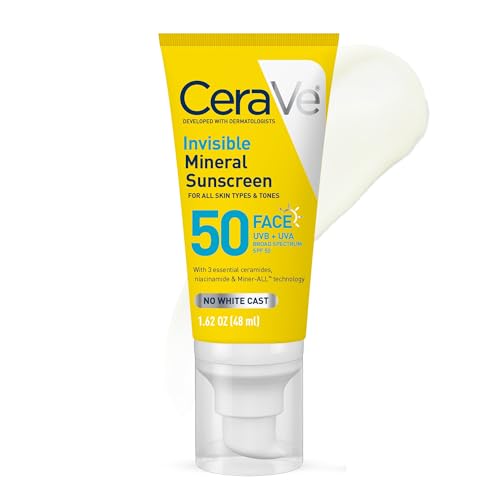
- [ INVISIBLE MINERAL SUNSCREEN FOR FACE ] Mineral sunscreen for all skin tones and skin types, offers 100% invisible finish and protection against...
- [ MINERAL SUNSCREEN APPLICATION ] High protection mineral sunscreen for face with no white cast. Shake well before use. Apply product generously to...
- [ GENTLE FORMULA ] Formula is fragrance free; noncomedogenic; and suitable for sensitive and acne-prone skin. Provides protection against UVA/UVB rays...
Last update on 2026-09-13 / Affiliate links / Images from Amazon Product Advertising API
CeraVe Invisible Mineral Sunscreen SPF 50
This sunscreen is a top pick for sensitive skin. It gives you broad-spectrum UVA/UVB protection without the white cast. The formula uses zinc oxide and titanium dioxide. It also has three essential ceramides to fix your skin barrier after sun exposure.
It is fragrance-free and noncomedogenic. So, it won’t clog pores. This sunscreen gives 24-hour hydration and works as a makeup primer. Shake the bottle well before use. Apply a generous amount 30 minutes before going outside. It works for all skin tones, even on beards. This product is FSA and HSA eligible.
Best For: People with sensitive or acne-prone skin. Also, anyone who wants a clear, mineral sunscreen that doubles as a hydrating primer.
Pros:
- Provides invisible, white-cast-free protection.
- Uses zinc oxide and titanium dioxide.
- Has three essential ceramides for skin barrier repair.
- Gives 24-hour hydration.
- Fragrance-free and noncomedogenic.
- Works as a makeup primer.
- Safe for all skin tones and beards.
Cons:
- Needs 30 minutes to work before sun exposure.
- The 1.62 oz travel size is small for full-body use.
- Mineral formulas may feel thicker than chemical sunscreens.
Factors to Consider When Choosing Sunscreen for Super Sensitive Skin
When you’re choosing a sunscreen for super sensitive skin, you’ll first need to decide between mineral and chemical filters, with mineral options like zinc oxide and titanium dioxide being the safest bets. You absolutely must look for fragrance-free formulations, as even natural scents can trigger irritation, and consider the water resistance duration based on your activities. Finally, a reef-safe ingredient focus should guide your choice, protecting both your skin and the environment.
Mineral vs. Chemical Filters
Choosing between mineral and chemical sunscreen can be tricky. But if you have super sensitive skin, the choice gets easier.
Mineral sunscreens sit on top of your skin. They work like a shield. They reflect UV rays away. Chemical sunscreens soak into your skin. They absorb UV rays and turn them into heat.
For sensitive skin, mineral filters are usually gentler. They don’t go deep into your skin. They cause fewer allergic reactions.
Some chemical filters, like oxybenzone and octinoxate, can cause problems. They may lead to redness, stinging, or itchiness. This is worse if you have rosacea.
Mineral sunscreens often skip common irritants like fragrance. This lowers the chance of a reaction.
They also work right away. You get broad-spectrum protection as soon as you apply it. Chemical filters need 20 to 30 minutes to become effective.
Zinc Oxide & Titanium Dioxide
Zinc oxide and titanium dioxide are both mineral sunscreens. For very sensitive skin, zinc oxide is usually the better choice. It blocks about 98% of UVB rays and a wide range of UVA rays. Titanium dioxide mainly blocks UVB rays and short UVA rays.
Both minerals sit on top of your skin. They do not soak in. This means less chance of stinging or allergic reactions. You will not get the irritation that some chemical sunscreens cause. They also will not clog your pores or cause breakouts.
For your sensitive skin, look for a sunscreen with zinc oxide alone, or a mix of both minerals. This gives you gentle, reliable protection. Your skin stays comfortable and safe from the sun.
Fragrance-Free Formulations Essential
If your skin is super sensitive, the “fragrance-free” label is a must. Do not trust products that say “unscented.” “Unscented” items often have masking fragrances. These fragrances hide the smell of other ingredients. They still can trigger a reaction on your skin.
Fragrance is one of the most common allergens in skincare. Even natural fragrances, like essential oils, can cause problems. They can inflame a damaged skin barrier. A truly fragrance-free formula lowers your risk of contact dermatitis. It also reduces irritation from daily use over time.
Always look for the exact words “fragrance-free” on the label. This guarantees no aromatic ingredients were added. “Unscented” does not offer the same protection. This simple choice helps stop long-term sensitization. Sensitization makes your skin more reactive. Avoiding fragrance is key to keeping super sensitive skin calm and healthy.
Water Resistance Duration
If you have very sensitive skin, the time on a sunscreen label matters more. You can pick either a 40-minute or an 80-minute water-resistant sunscreen. The 80-minute one is the better choice. It means you do not have to reapply as often. Less reapplication means less sunscreen builds up on your skin. This lowers the chance of a skin reaction.
The FDA makes every water-resistant sunscreen show its exact time on the bottle. This helps you choose wisely. But remember: you must put more on right after you towel dry. This is true even if the label says 80 minutes. The 40-minute option is shorter. It leaves more room for mistakes in reapplication. This can leave your sensitive skin without protection. Picking the longer time helps you keep even coverage. It also keeps your skin safe without extra irritation.
Reef-Safe Ingredient Focus
Traditional sunscreens often contain oxybenzone and octinoxate. These chemicals can cause skin irritation for some people. They also harm ocean life. Mineral sunscreens are a safer choice.
Mineral sunscreens use zinc oxide or titanium dioxide. These ingredients do not dissolve into the water in a harmful way. For the best reef safety, pick a product with non-nano particles. Small nanoparticles can be eaten by coral and tiny sea animals.
Most reef-safe sunscreens also leave out parabens and phthalates. These chemicals build up in nature and hurt wildlife.
Before you swim, let your mineral sunscreen soak into your skin. This step reduces wash-off into lakes and oceans. It keeps your protection working well without hurting the environment you love.
Non-Comedogenic & Hypoallergenic
If your skin is very sensitive, finding a sunscreen that is both non-comedogenic and hypoallergenic can stop two problems at once.
Non-comedogenic means the sunscreen will not clog your pores. This is very important if you get breakouts or skin irritation.
Hypoallergenic means the sunscreen has no common irritants like fragrances, parabens, or dyes. This lowers your risk of an allergic reaction.
Look for ingredients like zinc oxide and titanium dioxide. These are often the safest choices. They are usually both non-comedogenic and hypoallergenic because they rarely cause skin reactions.
Products with the non-comedogenic label have passed tests to prove they do not cause clogged pores. This helps reduce acne flare-ups.
Frequently Asked Questions
Can I Use These Sunscreens on Eczema-Prone Skin?
Yes, you can, but always patch-test first. These formulas are mineral-based and fragrance-free, so they shouldn’t irritate eczema. Apply a small amount to your inner arm and wait 24 hours to be sure.
Do Any of These Leave a White Cast on Darker Skin Tones?
You won’t find a ghostly white cast with these formulas. They use micronized minerals and clear chemical filters, so you’ll get invisible protection that blends seamlessly on your melanin-rich skin.
Are These Sunscreens Safe for Infants or Toddlers?
You’re asking if these are safe for infants? Generally, no. Dermatologists recommend mineral formulas for babies, but always check the label and consult your pediatrician first. They’re not all kid-friendly.
Will These Sting if They Get Into Your Eyes?
You won’t find a guarantee; eye sting risk always exists. You should still apply carefully around your eye area. These formulas use gentle, mineral filters, so they’re less likely to sting you.
How Do I Remove These Mineral Sunscreens Without Irritation?
Don’t scrub. Use a cleansing oil or balm, then a gentle cream cleanser. You’re dissolving the minerals without stripping your skin, so you won’t experience any irritation.
