
Finding the right sunscreen for combination skin can feel impossible—you need oil control for your T-zone but hydration for your cheeks. The 2026 market finally delivers three options that balance these competing needs without causing breakouts or dryness. Let’s break down exactly what makes each one work.
La Roche-Posay Anthelios Clear Skin SPF 60 Sunscreen

- Face sunscreen for oily skin with broad spectrum SPF 60 protection; Sunscreen absorbs pore clogging oil, even in heat and humidity; Formulated with...
- This daily face sunscreen provides advanced protection while absorbing pore-clogging oil. Our best sunscreen for acne prone skin is formulated with...
- Non-comedogenic sunscreen for sensitive skin provides broad spectrum protection. Oil-free sunscreen for acne prone skin helps absorb excess oil...

Last update on 2026-08-01 / Affiliate links / Images from Amazon Product Advertising API
What It Is
La Roche-Posay Anthelios Clear Skin SPF 60 Sunscreen is made for people with oily or acne-prone combo skin. It blocks the sun without making your face greasy.
How It Works
This sunscreen soaks up extra oil on your skin. It leaves a matte look, not a shiny one. The formula is lightweight and oil-free. It won’t clog your pores. You get broad spectrum SPF 60 protection from UVA and UVB rays. It also has Cell-Ox Shield antioxidants. These help fight damage from pollution and sun.
What’s Not Inside
This sunscreen is non-comedogenic, so it won’t cause breakouts. It has no fragrance. It is free from Oxybenzone, Octinoxate, and parabens. These ingredients can irritate skin or harm the environment.
How It Feels
The sunscreen stays on well in heat and humidity. It doesn’t feel greasy during the day. You can trust it for all-day wear.
Who It’s Best For
People with oily, acne-prone, or combination skin. Anyone who wants daily sun protection with a matte, shine-free finish.
Good Points
- Oil-free and lightweight
- Absorbs extra oil and cuts down shine
- High SPF 60 broad spectrum protection
- Has antioxidants for extra defense
- Won’t clog pores or cause breakouts
- No fragrance, Oxybenzone, Octinoxate, or parabens
Bad Points
- May leave a slight white cast on darker skin tones
- Can pill if you put makeup or other products on top
- Bottle is small, so you might need to buy it often for daily use
CeraVe Invisible Mineral Sunscreen SPF 50 Travel Size
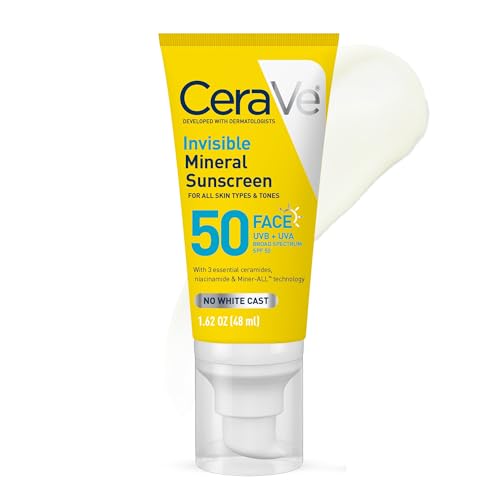
- [ INVISIBLE MINERAL SUNSCREEN FOR FACE ] Mineral sunscreen for all skin tones and skin types, offers 100% invisible finish and protection against...
- [ MINERAL SUNSCREEN APPLICATION ] High protection mineral sunscreen for face with no white cast. Shake well before use. Apply product generously to...
- [ GENTLE FORMULA ] Formula is fragrance free; noncomedogenic; and suitable for sensitive and acne-prone skin. Provides protection against UVA/UVB rays...
Last update on 2026-07-31 / Affiliate links / Images from Amazon Product Advertising API
CeraVe Invisible Mineral Sunscreen SPF 50 Travel Size
This sunscreen works great for sensitive combination skin. You get broad-spectrum protection without the white cast. It uses zinc oxide and titanium dioxide with Miner-ALL technology. It has no fragrance and won’t clog your pores. The formula hydrates for 24 hours. It also has three ceramides to repair your skin barrier.
How to use it: Shake the bottle well. Put a generous amount on your skin 30 minutes before going outside. It works well under makeup or on beards. Daily sun protection becomes easy for your combination skin.
Best For: People with sensitive, combination, or acne-prone skin. Use it if you want a non-greasy, invisible mineral sunscreen that works like a hydrating makeup primer.
Pros:
- Blocks UVA and UVB rays. It leaves no white cast on any skin tone.
- Uses three ceramides, zinc oxide, and titanium dioxide. These fix your skin barrier and hydrate for 24 hours.
- No fragrance. Does not clog pores. Safe for sensitive and acne-prone skin. Works under makeup or on beards.
Cons:
- Travel size (1.62 oz) runs out fast compared to a full-size bottle.
- You must shake it well before each use. Wait 30 minutes after applying for best protection.
- It can feel heavier on very dry skin compared to chemical sunscreens. It needs more blending.
Neutrogena Invisible Daily Defense SPF 60 Sunscreen
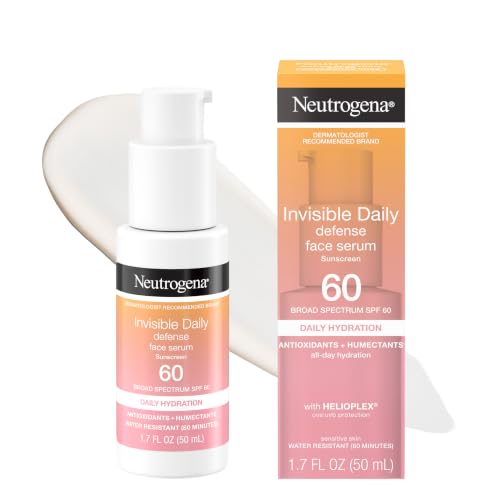
- SPF Face Moisturizer: This Neutrogena Face moisturizer is a daily face sunscreen and hydrating serum in one; a sunscreen and moisturizer that...
- Invisible face sunscreen for all skin tones: Invisible finish with no white cast; non-comedogenic moisturizer so it won’t clog pores as it hydrates...
- Hydrating serum for face: A lightweight, fragrance-free and non-greasy sunscreen; infused with ginger extract and antioxidant complex to help boost...
Last update on 2026-07-31 / Affiliate links / Images from Amazon Product Advertising API
Neutrogena Invisible Daily Defense SPF 60 works best for combination skin. It gives strong sun protection without leaving a white cast.
This sunscreen is oil-free and fragrance-free. It feels light like a serum and dries with a natural look. It will not clog your pores. It is broad spectrum SPF 60. It stays on for 80 minutes, even when you sweat or swim. You can put it on again over makeup without it pilling.
It has ginger extract and antioxidants. These fight pollution and ozone. They help even out your skin tone. They also help reduce fine lines, wrinkles, and dark spots. This sunscreen makes your skin look brighter. It keeps your natural moisture barrier strong. You can use it as a smooth base under makeup or on its own.
Best For: People with combination skin who want sun protection without a white cast.
Pros:
- Oil-free, fragrance-free, and won’t clog pores. Dries fast with a natural finish.
- Water and sweat resistant for 80 minutes. Stays good over makeup.
- Contains ginger and antioxidants to fight pollution, even skin tone, and reduce aging signs.
Cons:
- May not be hydrating enough for very dry skin.
- The 1.7 fl.oz bottle is small for daily use on your whole face.
- Some people may find the light texture not enough for heavy sun exposure.
Factors to Consider When Choosing Sunscreen for Face Combination Skin
You need to balance your combination skin’s oily and dry zones by selecting an SPF 30 or higher product that offers broad spectrum protection against UVA and UVB rays. Decide between a matte finish to control shine in your T-zone or a hydrating formula to nourish dry cheeks, but always choose a non-comedogenic label to prevent clogged pores. Pick from mineral filters for immediate gentle protection or chemical filters for a lightweight feel, though mineral options often suit sensitive skin better.
SPF Level Sufficiency
SPF 30 blocks about 97% of UVB rays. SPF 50 blocks about 98%. You do not need the highest number for everyday use.
For combination skin, SPF 30 gives enough protection for normal indoor activities. It works well. It feels light on the skin. It does not get greasy or cause irritation.
Save SPF 50 or higher for long time outside. It gives a bigger safety buffer against sunburn.
Higher SPF numbers, like 60 or 100, add very little extra protection. No sunscreen blocks all UV rays.
Use SPF 30 for daily life. Switch to a higher SPF only when you stay outdoors for hours. This keeps your combination skin safe and comfortable.
Broad Spectrum Protection
SPF only measures protection against UVB rays. A high SPF number does not mean you are safe from UVA rays. UVA rays go deeper into your skin. They cause early aging, dark spots, and damage to collagen. These rays can reach you through clouds and glass. For combination skin, broad spectrum protection is not a choice. It is a must.
The FDA says a “broad spectrum” sunscreen must pass a test at 370 nanometers. This test checks for balanced UVA and UVB protection. Without this label, you risk daily sun damage over time. Look for “broad spectrum” on your face sunscreen bottle. This choice protects you from UVB rays that cause sunburn and UVA rays that cause aging. It works for oily or dry skin. Do not trust SPF alone. Ask for full protection.
Matte vs. Hydrating Finish
Combination skin needs a careful choice between matte and hydrating sunscreens. These two finishes fight against different problems on your face.
A matte finish uses powder-like silica. It soaks up oil on your T-zone. This cuts shine by up to 50% for hours. But it can dry out your cheeks if they are already flaky.
A hydrating finish uses humectants like glycerin. It holds moisture in the skin. This stops dryness for 20-30% longer. But it can make your oily forehead look glossy.
The base of the sunscreen matters. Gel sunscreens with alcohol dry to a matte look. Cream sunscreens leave a dewy layer. For combination skin, avoid the two extremes. Do not pick a matte formula that cracks dry patches. Do not pick a hydrating formula that slicks your T-zone.
Choose a balanced finish. It should control shine but still add moisture to dry spots. This addresses both zones without making either worse.
Non-Comedogenic Formulas
Combination skin has dry patches and breakouts. Non-comedogenic formulas help both. They do not clog pores. You need a sunscreen that does not cause whiteheads or blackheads. This matters most on oily areas.
Products use a rating system. Ingredients with a score of 0 to 1 are safe for pores. Zinc oxide and titanium dioxide are non-comedogenic. They protect your skin without blocking oil glands.
Many oil-free options have dry-touch technology or silica. These ingredients soak up extra oil on your T-zone. They also add moisture to dry spots. A non-comedogenic formula stops acne before it starts. This is key for combination skin with different oil levels across your face.
Mineral vs. Chemical Filters
Mineral and chemical suncreens work in different ways. Mineral sunscreen sits on your skin. It uses zinc oxide or titanium dioxide to block UV rays. This type is less likely to irritate your skin or clog pores. That makes it a good pick if your skin is sensitive or breaks out easily. You can go outside right after you put it on. But mineral sunscreen can leave a white cast on medium or dark skin.
Chemical sunscreen soaks into your skin. It turns UV rays into heat. This sunscreen goes on clear and invisible. You need to wait 20 to 30 minutes before going outside. Some chemical filters, like avobenzone, break down fast in the sun without extra ingredients. Mineral filters stay stable and do not break down. On oily parts of your face, chemical sunscreen can feel greasy. So think about whether you prefer a white cast or a greasy feel.
Oil Control Properties
Sunscreen can help control oil on your skin. It works best on the oily parts of combination skin.
Ingredients like silica or starch soak up extra oil. This stops shine for hours, even in humidity.
A matte finish does not dry out your skin. It keeps both oily and dry areas balanced.
Choose non-comedogenic options. They stop clogged pores and breakouts.
Look for lightweight, oil-free formulas. They absorb oil without drying out drier spots.
Many sunscreens with SPF 60 or higher have this oil control technology. You get sun protection and shine control in one product.
Pick a sunscreen that keeps your T-zone matte. It should also leave your cheeks feeling comfortable.
Suitable for Sensitive Skin
Choosing a face sunscreen for sensitive skin needs extra care. This is true if you also have combination skin. Combination skin has oily and dry parts. You want a sunscreen that works for both.
Pick a sunscreen with no fragrance. Fragrance can cause redness or stinging. This is common for sensitive skin.
Look for “non-comedogenic” on the label. This means it will not clog your pores. Clogged pores cause breakouts, especially on your T-zone.
Mineral sunscreens are a good choice. They use zinc oxide or titanium dioxide. These ingredients sit on top of your skin. They block the sun without causing chemical reactions.
Choose “allergy-tested” sunscreens. These avoid common irritants. They give you extra safety.
Avoid sunscreens with oxybenzone and octinoxate. These are chemical filters. They often trigger skin reactions.
Frequently Asked Questions
Can I Use Combination Skin Sunscreens on Oily Days?
Yes, you can use combination sunscreens on oily days. They won’t clog your pores, but for heavy shine, grab a mattifying formula instead.
How Do I Remove Mineral Sunscreen Without Irritating My Skin?
You’ll remove mineral sunscreen gently by double-cleansing. Start with an oil-based cleanser to dissolve it, then follow with a water-based one. Don’t scrub; just pat dry.
Does SPF 60 Sunscreen Prevent Hyperpigmentation on Combination Skin?
Yes, SPF 60 sunscreen prevents hyperpigmentation on combination skin by blocking 98% of UVB rays. You’ll need to reapply every two hours for consistent protection, but it’s highly effective when used daily.
Should I Apply Sunscreen Before or After Moisturizer for Combination Skin?
You should apply moisturizer first, then sunscreen. This lets the moisturizer hydrate without diluting your SPF. Don’t skip this step—it’s essential for balanced, protected skin.
Can Combination Skin Use the Same Sunscreen Year-Round?
You can use the same sunscreen year-round if it’s lightweight and non-comedogenic. Just adjust for seasonal changes—swap to a gel formula in summer and a hydrating one in winter.