
If you have acne-prone skin, finding a sunscreen that protects without causing breakouts can feel impossible. You need a non-comedogenic, oil-free formula that controls shine. The top three options for 2026—Neutrogena Clear Face, Eucerin Clear Skin, and La Roche-Posay Anthelios—all deliver matte, broad-spectrum protection from SPF 50 to 60. Here is exactly how they prevent clogged pores and excess oil.
Neutrogena Clear Face Sunscreen SPF 50, Unscented
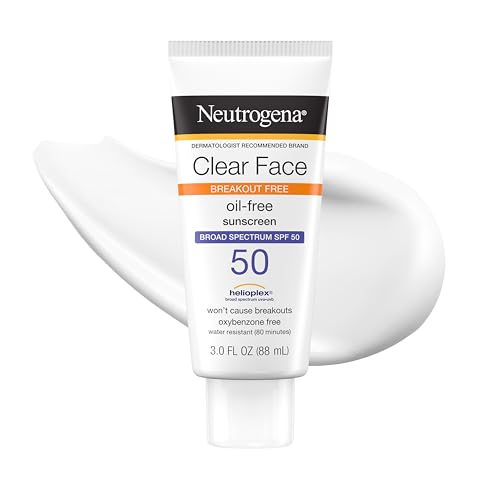
- Designed for acne-prone skin: Broad spectrum SPF 50 facial sunscreen formulated for oily and sensitive skin and reliable UVA/UVB protection while...
- Clear Face formula: Non-comedogenic daily face sunscreen with a lightweight, oil-free texture that absorbs quickly, feels breathable, and is...
- Sunscreen that won't cause breakouts: Oil-free and oxybenzone-free facial sunscreen moisturizer designed to support consistent, daily sun protection...

Last update on 2026-08-01 / Affiliate links / Images from Amazon Product Advertising API
Neutrogena Clear Face Sunscreen SPF 50 is made for oily, acne-prone skin. It won’t clog your pores or cause breakouts. The formula is lightweight and oil-free. It absorbs fast and leaves a matte finish. Your skin can breathe.
This sunscreen gives you broad spectrum UVA/UVB protection. It uses Helioplex technology. It is water-resistant for up to 80 minutes. This version is unscented. It has no oxybenzone and no fragrance. That means less irritation.
Dermatologists recommend this sunscreen for clear skin. It helps lower the risk of sun damage and breakouts during outdoor time.
Best For: People with oily, acne-prone, or sensitive skin. You want a light, non-greasy sunscreen that protects without causing breakouts or irritation.
Pros:
- No oil, no fragrance, and no oxybenzone. This cuts down on irritation and breakouts for sensitive skin.
- SPF 50 broad spectrum protection plus water resistance for 80 minutes.
- Light and non-greasy. It dries to a matte finish. It does not clog pores.
Cons:
- Can leave a slight white cast on darker skin if you don’t rub it in all the way.
- Some people say it feels a little sticky or heavy in high humidity.
- The small 3 oz bottle runs out fast if you use it on your face every day.
Eucerin Clear Skin Face Sunscreen SPF 50

- HSA ELIGIBLE/FSA ELIGIBLE SUNSCREEN: Includes one 2.5 fluid ounce bottle of Eucerin Sun Clear Skin Face Sunscreen SPF 50
- OILY SKIN CONTROL: Eucerin sunscreen enriched with 5 antioxidants (Glycyrrhetinic Acid, Licochalcone A, Vitamin E, Vitamin C, Oxynex ST) and...
- LIGHTWEIGHT SUNSCREEN WITH MATTE FINISH: Lightweight sunscreen for face provides an immediate, long-lasting matte finish, and suitable for daily...
Last update on 2026-08-01 / Affiliate links / Images from Amazon Product Advertising API
Eucerin Clear Skin Face Sunscreen SPF 50 works great for people with oily or acne-prone skin. It gives daily sun protection without making your face look shiny.
This sunscreen feels light on the skin. It is not greasy. It leaves a matte finish that lasts all day. You can wear makeup on top of it without looking shiny.
The formula has minerals that soak up oil. It also has five antioxidants, like Vitamin C and Licochalcone A. These stop free radicals from harming your skin. It blocks UVA and UVB rays.
You can trust this product on sensitive skin. It is hypoallergenic and non-comedogenic. That means it won’t clog pores. It has no fragrance, dyes, or parabens.
The bottle holds 2.5 fluid ounces. It has a pump dispenser, so you can use it easily every day. Eucerin uses science to make this sunscreen safe for your skin.
Best For: People with oily, acne-prone, or sensitive skin who want a matte look without grease.
Pros:
- Gives a fast, lasting matte finish that works under makeup.
- Absorbs oil with minerals and fights free radicals with five antioxidants.
- Safe for sensitive skin. No fragrance, dyes, or parabens.
Cons:
- Not moisturizing enough for dry skin.
- Only a 2.5 ounce bottle means you will need to buy it often.
- Some people think the matte texture feels dry or looks chalky on their skin.
La Roche-Posay Anthelios Clear Skin SPF 60 Sunscreen

- Face sunscreen for oily skin with broad spectrum SPF 60 protection; Sunscreen absorbs pore clogging oil, even in heat and humidity; Formulated with...
- This daily face sunscreen provides advanced protection while absorbing pore-clogging oil. Our best sunscreen for acne prone skin is formulated with...
- Non-comedogenic sunscreen for sensitive skin provides broad spectrum protection. Oil-free sunscreen for acne prone skin helps absorb excess oil...
Last update on 2026-08-01 / Affiliate links / Images from Amazon Product Advertising API
La Roche-Posay Anthelios Clear Skin SPF 60 Sunscreen
If you have oily, acne-prone skin, this sunscreen is a great pick. It gives you a matte look and won’t clog your pores. The formula is oil-free and blocks UVA and UVB rays. It also fights heat and humidity with special antioxidant tech.
This sunscreen soaks up extra oil to cut down shine. You get a matte finish without irritation. It is non-comedogenic and has no added scent. Allergy tests make it safe for sensitive skin.
You get SPF 60 protection. There is no oxybenzone or octinoxate. The texture is light and paraben-free. It does not cause breakouts. Use it every day in humid weather.
Best For: People with oily, acne-prone, or sensitive skin. You want a matte look and high protection in humid places.
Pros:
- Blocks UVA and UVB rays at SPF 60 with no oxybenzone or octinoxate
- Absorbs oil to reduce shine and give a matte finish
- Non-comedogenic, no fragrance, and safe for sensitive, acne-prone skin
Cons:
- Can leave a slight white cast on darker skin tones
- Feels drying for normal or dry skin types
- Small travel size means you buy it often for daily face use
Factors to Consider When Choosing Face Sunscreen for Acne-Prone Skin
Before you buy, focus on the SPF level first—you need at least 30 for reliable protection, but 50 is better for extended outdoor wear. You’ll also want a non-comedogenic formula with an oil-free texture to avoid clogging your pores, and you should check for fragrance-free ingredients to prevent irritation. Finally, look for a matte finish, as it helps control shine throughout the day without exacerbating breakouts.
SPF Level
SPF stands for Sun Protection Factor. It measures how well a sunscreen blocks UVB rays. UVB rays cause sunburn. For acne-prone skin, picking the right SPF is important.
SPF 15 blocks about 93% of UVB rays. SPF 30 blocks 97%. SPF 50 blocks around 98%. These numbers show a small difference between levels. SPF 50 is a good choice for sensitive, acne-prone skin. It gives strong protection and needs less reapplication. Less reapplication means less chance of upsetting your skin.
No sunscreen blocks 100% of UVB rays. For daily use, SPF 30 or higher works well. You just need to apply it correctly. Remember, SPF only guards against UVB rays. To protect against UVA rays, pick a broad-spectrum sunscreen. UVA rays cause aging and skin damage.
Jumping from SPF 50 to SPF 100 provides almost no extra benefit. SPF 50 blocks 98% of UVB rays. SPF 100 blocks 99%. That is just a 1% difference. So, focus on how you apply sunscreen. Put on enough and cover all exposed skin. Consistent, thorough application matters more than a high SPF number.
Non-Comedogenic Formula
If your skin is acne-prone, it is already easy for pores to clog. You need a face sunscreen with a non-comedogenic formula. This label means the product will not block your hair follicles. It is tested on a scale from 0 to 5. The score is low, usually 0 to 2. The sunscreen avoids ingredients that clog pores. These ingredients include heavy oils, cocoa butter, and some silicones. This choice helps prevent new breakouts. The sunscreen creates a protective layer against UV rays. It does not trap sebum or dead skin cells. This process supports your skin’s natural shedding. You can keep your skin clearer and stay safe from the sun. When you read product labels, look for this feature. It is key for your acne-prone skin type.
Oil-Free Texture
Acne-prone skin needs oil-free products. Oil-free textures stop clogged pores. They avoid adding extra oils that cause breakouts.
Lightweight formulas help your skin breathe. They cut down trapped oil and pimples. Many oil-free sunscreens use ingredients like silica or starches. These soak up extra surface oil. Your face stays shine-free all day.
A heavy, oily layer traps bacteria and dead skin. This worsens acne. Oil-free textures reduce that risk. Pick water-based or gel-based options instead. They block sun without greasy residue.
Choose oil-free formulas. They keep your skin clear and balanced.
Fragrance-Free Ingredients
Fragrance-free ingredients are important for acne-prone skin. Cosmetics can have over 2,000 different fragrance parts. Many of these cause allergies. Fragrance does not just irritate your skin. It can cause dermatitis, which is a skin rash. This swelling makes acne worse.
When you choose fragrance-free sunscreen, you remove fake scents. These scents can hurt your skin barrier. Your skin barrier is your main shield against acne bacteria. Keeping it strong is key.
These products also go through stricter tests. They have fewer volatile organic compounds. Those compounds can clog pores or make skin sensitive. Studies show fragrance is one of the top five causes of skin reactions from cosmetics.
For you, skipping fragrance is not a choice. It is a vital step to avoid irritation. It keeps your skin calm and safe. Stick with fragrance-free products. This helps you keep clear skin without adding fuel to the fire.
Matte Finish
A matte finish does more than stop shine. It helps control extra oil throughout the day. This is important if you have acne-prone skin.
Matte sunscreens use special ingredients like silica or starches. These ingredients soak up oil on your skin. They do not remove your skin’s moisture.
A good matte finish usually lasts 6 to 8 hours. This means you will not look greasy in the middle of the day. Non-greasy matte formulas also pick up less dirt and dust. This lowers your chance of clogged pores and breakouts.
You do not have to worry about losing sun protection. A matte finish does not weaken SPF. Just apply the sunscreen evenly and use enough. Your UV protection stays strong. Remember to reapply after sweating or long sun exposure.
Water Resistance
Water Resistance
Now you know a matte finish helps control oil. Let’s look at another key factor for clear, protected skin: water resistance.
The FDA tests sunscreens to keep their SPF after 40 or 80 minutes in water. Check the bottle for the exact time. This resistance stops sunscreen from sweating or washing off during exercise. You won’t need to reapply as often, which helps avoid irritating your pores.
Non-comedogenic water-resistant formulas work well outdoors. They won’t cause extra breakouts.
But remember: water resistance does not mean waterproof or sweatproof. You still need to reapply every two hours for the best protection.
Antioxidant Benefits
Antioxidants help your skin in many ways. They work with sunscreen to give you extra protection. Ingredients like Vitamin C and Vitamin E stop free radicals. Free radicals cause skin damage and make acne worse.
Antioxidants also help with dark spots. They slow down melanin production. This reduces post-inflammatory hyperpigmentation.
Other antioxidants like Licochalcone A and Glycyrrhetinic Acid calm irritated skin. They also shield it from UV rays. A formula with several antioxidants fights different types of damage.
Using antioxidants and SPF together slows down aging. This is especially important if you are treating acne. You get better protection and healthier skin over time.
Dermatologist Recommended
Pairing antioxidants with SPF helps manage acne-prone skin. Choose a sunscreen that dermatologists recommend. This adds more protection.
Look for non-comedogenic formulas. They are tested and proven not to clog pores. The American Academy of Dermatology suggests broad-spectrum sunscreen with at least SPF 30. This is a common expert guideline.
Pick oil-free, lightweight options. They reduce extra oil and help prevent breakouts. Dermatologists avoid ingredients like oxybenzone, parabens, and artificial fragrances. These can clog pores and cause irritation.
Use these sunscreens daily. They help stop dark spots that form after a pimple heals. Stick with dermatologist-recommended picks. You protect your skin without causing new breakouts.
Frequently Asked Questions
Can Mineral Sunscreens Clog Pores Compared to Chemical Ones?
Mineral sunscreens don’t inherently clog pores more than chemical ones—they’re often less irritating. You’ll find zinc oxide and titanium dioxide sit on top, not inside your pores, unlike some chemical filters.
How Often Should I Reapply Sunscreen on Acne-Prone Skin?
You should reapply sunscreen every two hours, even with acne-prone skin. Don’t skip this step—it’s essential for preventing hyperpigmentation. Set a timer or use a powder sunscreen for touch-ups without disrupting your makeup.
Does Sunscreen Cause More Breakouts During Humid Weather?
No, sunscreen doesn’t directly cause breakouts in humidity, but heavy formulas can clog pores. You’ll avoid this by choosing an oil-free, non-comedogenic option and removing sweat promptly to prevent irritation.
Should I Skip Moisturizer if My Sunscreen Is Hydrating?
You shouldn’t skip moisturizer. A hydrating sunscreen lacks enough emollients for full moisture protection. You’ll risk dehydration, triggering more oil and breakouts. Always layer a lightweight, oil-free moisturizer first.
Can I Use These Sunscreens if I’m on Prescription Acne Medication?
Yes, you can use these sunscreens on prescription medication. However, you must check with your dermatologist first. They’ll confirm the formula won’t react negatively with your specific treatment plan.