
If you struggle with body breakouts, choosing the wrong sunscreen can make things worse. For 2026, three top products stand out for protecting acne-prone skin without clogging pores. You’ll want to know how they differ in texture, protection, and ingredients before you buy. Let’s examine each option closely.
Neutrogena Clear Body Sunscreen SPF 50 Spray

- Broad spectrum SPF 50 sunscreen spray with Helioplex technology for superior UVA/UVB sun protection. Dries invisibly without leaving a white cast...
- Water-resistant for up to 80 minutes while swimming or sweating. Reapply as directed, every 2 hours under normal conditions for continuous skin sun...
- Infused with Vitamin E & niacinamide, this formula cools & moisturizes skin while helping prevent sunburn. If used as directed with other sun...

Last update on 2026-08-20 / Affiliate links / Images from Amazon Product Advertising API
Neutrogena Clear Body Sunscreen SPF 50 Spray has Vitamin E and niacinamide. These ingredients cool and moisturize your skin. This spray helps prevent sunburn and lowers your risk of skin cancer.
The formula is non-comedogenic and fragrance-free. It will not clog your pores. This makes it a good choice for oily or acne-prone skin.
How to use it: Spray it on your body. Reapply every two hours. You will get lightweight protection that stays invisible.
Best For: People with oily or acne-prone skin. You want strong SPF 50 protection that feels light and dries clear. It is water-resistant and also cools and moisturizes without blocking pores.
Pros:
- Will not clog pores. Contains no fragrance. Great for sensitive or oily skin.
- Dries clear. No white marks. Works on all skin tones.
- Stays waterproof for 80 minutes. Good for swimming or outdoor sports.
Cons:
- You must reapply every 2 hours. This can feel like a hassle.
- Spray can be uneven if you do not spread it carefully.
- The 5 oz bottle may run out fast if you use it on your whole body often.
Neutrogena Clear Body Sunscreen SPF 30
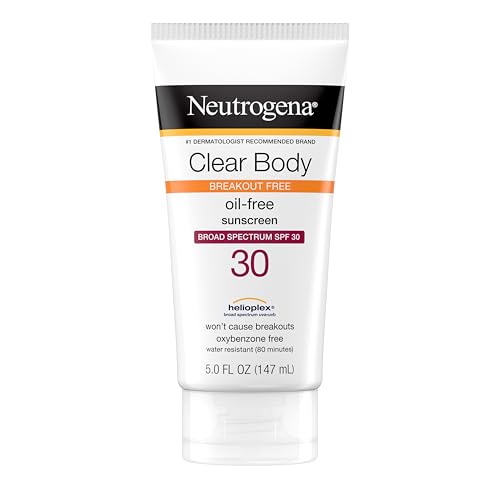
- Neutrogena Clear Body Breakout-Free Liquid Sunscreen Lotion with Broad Spectrum SPF 30 for acne prone skin. The oxybenzone-free sunscreen is developed...
- Sunscreen lotion from the #1 dermatologist recommended suncare brand has a water-light texture that leaves a weightless, matte finish and allows skin...
- Dermatologist tested sunscreen formula is non-comedogenic, so it won't cause breakouts or clog pores. Ideal for individuals with acne prone skin
Last update on 2026-08-20 / Affiliate links / Images from Amazon Product Advertising API
Neutrogena Clear Body Sunscreen SPF 30 is a solid choice for body protection. It helps prevent sunburn and breakouts.
This sunscreen uses Broad Spectrum SPF 30 with Helioplex Technology. It blocks UVA rays (which age skin) and UVB rays (which burn skin). It does not contain Oxybenzone.
The lotion feels light and weightless on the skin. It dries to a matte finish. Your skin will feel clean, not greasy.
The formula is oil-free and non-comedogenic. That means it will not clog your pores or cause pimples. It is also fragrance-free and dermatologist-tested.
This sunscreen is water resistant for 80 minutes. When used as directed, it helps lower your risk of skin cancer.
Best For: People with acne-prone skin who want sun protection for face and body without breakouts.
Pros:
- Blocks UVA and UVB rays with SPF 30 and Helioplex.
- Oil-free, non-comedogenic, and fragrance-free. Will not clog pores.
- Lightweight with a matte finish. Skin stays clear, not greasy.
Cons:
- Water resistant for only 80 minutes. You must reapply after swimming or sweating.
- No Oxybenzone, but other chemical filters may irritate very sensitive skin.
- Comes in a 5 fl. oz. bottle. This size can be bulky to carry around.
La Roche-Posay Anthelios Clear Skin SPF 60 Sunscreen

- Face sunscreen for oily skin with broad spectrum SPF 60 protection; Sunscreen absorbs pore clogging oil, even in heat and humidity; Formulated with...
- This daily face sunscreen provides advanced protection while absorbing pore-clogging oil. Our best sunscreen for acne prone skin is formulated with...
- Non-comedogenic sunscreen for sensitive skin provides broad spectrum protection. Oil-free sunscreen for acne prone skin helps absorb excess oil...
Last update on 2026-08-25 / Affiliate links / Images from Amazon Product Advertising API
If your skin gets oily and breaks out, this sunscreen is your best pick. It is La Roche-Posay Anthelios Clear Skin SPF 60. The formula is oil-free. It uses Cell-Ox Shield tech to block UVA and UVB rays. It also fights dirt and pollution. You get SPF 60 without Oxybenzone or Octinoxate.
The Dry Touch finish soaks up extra oil fast. It cuts down shine. Your face stays matte, even in hot, sticky weather. This sunscreen won’t clog pores. It has no smell. It is paraben-free. So it won’t cause pimples or red skin. It is light and safe for everyday use.
Best For: Oily, acne-prone, or sensitive skin. You want a matte look. You need high SPF that does not cause breakouts.
Pros:
- Oil-free SPF 60 with Cell-Ox Shield antioxidant protection
- Dry Touch finish removes oil and shine for a matte look in heat
- Non-comedogenic, fragrance-free, and paraben-free to stop pimples and irritation
Cons:
- Small bottle may need buying often for full-body use
- May not add enough moisture for dry or combination skin
- Hard to find bigger bottles for cheaper daily use
Factors to Consider When Choosing Body Sunscreen for Acne Prone Skin
You need to evaluate several key factors when picking a body sunscreen for acne-prone skin. First, you’ll want a non-comedogenic, oil-free formula to avoid clogging your pores, but you must also check for broad spectrum protection and an appropriate SPF level. Finally, consider your water resistance needs if you plan to sweat or swim, as this affects how often you’ll need to reapply.
Non-Comedogenic Formulas
Non-comedogenic formulas help you avoid clogged pores. This is key if you have acne-prone skin but still need sun protection. When you see this label on a body sunscreen, it means the product was tested to lower the chance of blackheads or whiteheads.
These formulas leave out heavy oils and certain thick ingredients that can cause breakouts on your chest, back, or shoulders. You get the sun protection you need. You do not have to worry about making acne worse or causing new pimples. This helps your skin keep its natural oil balance and stops comedones from forming.
Oil-Free Ingredients
Oil-free ingredients work well for acne-prone skin. They stop pores from clogging. Clogged pores cause breakouts. This is true if you have oily skin.
Some oil-free ingredients soak up extra oil. Dimethicone and silica are examples. They help your skin stay matte. You avoid feeling greasy during the day.
Non-comedogenic means the product won’t block hair follicles. It won’t cause blackheads or whiteheads. Special tests confirm this.
Oil-free formulas also feel lighter. Traditional sunscreens can be heavy and sticky. That sticky feeling often makes acne worse.
Many oil-free sunscreens use silicone-based carriers. These spread evenly. They do not leave a heavy feel. Your skin stays protected and comfortable.
You do not have to choose between clear skin and sun safety. An oil-free option supports your skin’s needs.
Broad Spectrum Protection
Broad spectrum sunscreen protects you from two types of UV rays. UVA rays cause early aging. UVB rays cause sunburn. This matters a lot if you treat breakouts. Common acne products, like retinoids, make your skin extra sensitive to the sun. Do not skip this protection. It keeps your skin safe while you clear your acne.
SPF Level Selection
SPF 30 blocks about 97% of UVB rays. SPF 50 blocks about 98%. That small difference matters a lot for acne-prone skin.
Dermatologists suggest SPF 30 at least for daily use. Many acne treatments make your skin more sensitive to the sun. You do not need the highest number all the time. SPF 50 or 60 gives longer protection when you are outside for a while. You will not have to reapply as often.
But broad spectrum protection is more important than the SPF number. UVA protection stops dark spots from old acne marks. This is a key concern for your skin.
No SPF blocks all UV rays. You must reapply every two hours to keep your skin safe. This balance protects your skin without clogging pores.
Water Resistance Needs
If you swim or exercise, water resistance matters for sunscreen.
SPF and broad spectrum are the basics. Water resistance is the next thing to think about.
Sweat mixed with sunscreen can clog pores, especially on acne-prone skin. A water-resistant sunscreen stays on your face longer. This helps reduce that risk.
The FDA sets rules for water resistance. A product must keep its SPF after 40 minutes in water. A “very water resistant” label means it lasts up to 80 minutes.
Choose an 80-minute rating for long activities. You will need fewer reapplications. This means less product on your skin. Less product means less chance of breakouts.
Matte Finish Textures
Sunscreen for acne-prone skin needs to control shine. A matte finish sunscreen does this well. It contains special powders like silica or starch. These powders soak up extra oil on your skin.
This helps in two ways. First, it reduces shine. Second, it makes large pores look smaller. Both are important for skin that breaks out easily.
These sunscreens feel light on your skin. They are not greasy. They dry to a soft, powdery finish. This finish stays in place and resists smudging. Your skin looks natural, not shiny. Sunlight won’t reflect off it unevenly.
But remember one thing. The oil control does not last all day. Sweat or humidity can stop it from working. For the best results, apply it again a few times during the day.
Using a matte finish sunscreen helps stop oil from getting trapped in your pores. This lowers your chance of getting new breakouts.
Fragrance-Free Options
Fragrance can cause breakouts for people with acne-prone skin.
It can damage your skin’s barrier and make breakouts worse.
Many body sunscreens now say “fragrance-free” on the label.
This means they do not use scents that can clog pores or cause skin rashes.
Choose a fragrance-free sunscreen to lower your risk of irritation.
This is extra important if you already use acne treatments, because your skin is sensitive.
These sunscreens have no fake or natural smells.
That cuts down on your contact with allergens that might make acne worse.
Using a fragrance-free sunscreen every day helps you build a good sun habit.
You get sun protection without stinging or redness from scented products.
Your routine stays simple, effective, and kind to your skin.
Gentle Sunscreen Filters
What Sunscreen Filter Is Best for Acne-Prone Skin?
The filter in your sunscreen matters a lot. It can make or break how your skin feels.
For acne-prone skin, mineral filters are the safest pick. These include zinc oxide and titanium dioxide. They stay on top of your skin. They do not soak in. This stops them from clogging your pores.
Chemical filters often cause irritation. They can make breakouts worse.
Non-nano mineral filters are even better. The particles are larger. They do not enter your skin layers. This lowers the chance of redness or stinging.
Zinc oxide is a great choice. It also calms inflammation. It helps heal existing pimples while blocking both UVA and UVB rays.
Avoid chemical filters like oxybenzone and octinoxate. These can trigger allergic reactions. They often worsen acne.
Stick with gentle mineral filters. They protect your skin without hurting your breakouts.
Frequently Asked Questions
Can I Use Face Sunscreen on My Body Instead?
Yes, you can use face sunscreen on your body, but it’s less cost-effective. Face formulas often cost more per ounce, so you’ll burn through your budget quickly. Stick to body-specific products for better value.
Does Spray Sunscreen Offer the Same Protection as Lotion?
You’re getting the same protection with spray sunscreen if you apply it generously and evenly. Don’t forget to rub it in; missing spots reduces coverage, so be thorough.
Will These Sunscreens Cause Breakouts on My Back or Chest?
You’re safe—these sunscreens won’t cause breakouts. They’re non-comedogenic and oil-free, so you’ll get full protection without clogging pores on your back or chest.
How Often Should I Reapply Sunscreen on My Body?
You should reapply every two hours, or immediately after swimming or sweating. Don’t skip this step even with “all-day” formulas. Your skin needs consistent protection, not just one application.
Can I Wear These Sunscreens Under Tight Athletic Clothing?
You can wear them under tight gear, but be sure they’re fully dry first. Non-comedogenic formulas resist clogging pores, so you’re set for sweat—just reapply after heavy activity for full protection.
