
If your acne-prone skin demands reliable sun protection without breakouts or a greasy feel, these three Asian formulas deliver. You get broad-spectrum defense, soothing ingredients, and finishes made for sensitive skin. But the best choice depends on your specific tolerance and texture preferences, so understanding the differences matters. Let’s break down what sets each one apart.
Haruharu Wonder Black Rice Moisture Sunscreen

- AIRLESS PROTECTION: Shield your product from oxidation with airless packaging, ensuring freshness and efficacy every time you use it!
- ANTIOXIDANT BLISS: Infused with Rice Bran Oil and Black Rice, our formula provides a powerful antioxidant effect for radiant, moisturized skin.
- TWO FINGERS, FULL PROTECTION: Follow the 2-finger rule for perfect coverage on face, neck, and ears—no spots missed!
Haruharu Wonder Black Rice Moisture Sunscreen is a great pick for acne-prone skin. It gives broad-spectrum protection without blocking pores or adding shine. You get a smooth, velvet finish and no white cast. The airless bottle keeps ingredients like Rice Bran Oil and Black Rice fresh and effective. Use the 2-finger rule to apply it on your face, neck, and ears. This sunscreen is vegan and cruelty-free. It hydrates and calms irritation. You do not have to choose between clear skin and moisture. It works well for daily use.
Best For: People with acne-prone skin who want a lightweight, hydrating sunscreen that does not clog pores or leave a white cast.
Pros:
- Velvet finish with no white cast for a natural look.
- Airless bottle keeps antioxidant-rich ingredients fresh.
- Vegan and cruelty-free. Hydrates and soothes without being greasy.
Cons:
- Not water-resistant. You must reapply after swimming or sweating.
- Costs more than standard drugstore sunscreens.
- Small 1.69 fl. oz. bottle may need frequent buying for daily use.
Innisfree Daily UV Defense SPF 36 Sunscreen

- Award-winning Korean sunscreen with SPF 36 offers broad spectrum UVA/UVB protection and a dewy, no white cast finish. 86% saw no white cast*. *Home...
- Benefits: Lightweight SPF 36 Korean sunscreen with Green Tea, Sunflower Seed Oil, and Cica delivers broad spectrum UVA/UVB protection while hydrating...
- Green Tea: Nurtures skin with soothing and calming hydration benefits

Looking for a sunscreen that won’t cause breakouts but still protects your skin? Innisfree Daily UV Defense SPF 36 is a good pick. It blocks both UVA and UVB rays. The formula is lightweight and invisible. It leaves no white cast. In a home survey, 86% of users said they saw no white cast after one use.
Key ingredients help your skin. Green Tea, Cica, and Sunflower Seed Oil soothe irritation. They reduce redness. They add moisture without clogging pores. This sunscreen is great for acne-prone skin.
It won the 2023 Allure Best of Beauty award. The ingredients come from Jeju and are responsibly sourced. It avoids harmful chemicals.
Best For: Anyone with acne-prone or sensitive skin who wants a light, non-greasy sunscreen that protects without causing breakouts or leaving a white cast.
Pros:
- 86% of users saw no white cast after one use. Finish looks natural.
- Green Tea, Cica, and Sunflower Seed Oil calm redness, hydrate, and don’t clog pores.
- Won the 2023 Allure Best of Beauty award. Uses safe, responsibly sourced ingredients.
Cons:
- SPF 36 is lower than SPF 50. For long time outdoors, you might want a higher SPF.
- It leaves a dewy finish. If you prefer a matte look, this might not work.
- The white cast claim is based on a survey of only 30 women. Results may not apply to everyone.
Anua Zero-Cast Moisturizing Sunscreen SPF 50
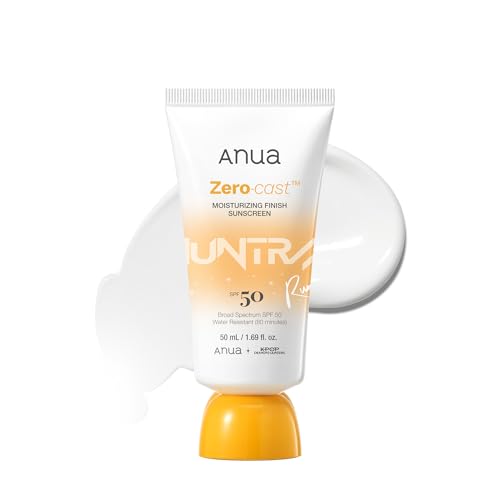
- [Spf 50 protection] Korean face sunscreen with SPF 50 shields skin from UVA/UVB rays and sun-induced dryness.
- [Zero-cast glow] Low white cast formula blends evenly on all skin tones, delivering hydration and a natural glow.
- [72h hydration] Hyaluronic acid, glycerin, niacinamide and panthenol support long-lasting moisture and skin barrier care.
Anua Zero-Cast Moisturizing Sunscreen SPF 50 protects your skin from the sun without causing breakouts. It has a light, oil-free feel that won’t clog your pores or leave a greasy shine. This makes it a great pick for acne-prone or oily skin.
The formula keeps your skin hydrated for 72 hours. It uses hyaluronic acid and glycerin to lock in moisture. Niacinamide and panthenol help strengthen your skin barrier. You get a natural glow with no white cast, even on darker skin tones. This Korean sunscreen also works well under makeup.
Best for: People with acne-prone or oily skin who want a lightweight, hydrating sunscreen that doesn’t leave a white cast.
Good things:
- Hydrates for 72 hours with hyaluronic acid and glycerin, plus strengthens the skin barrier with niacinamide and panthenol.
- Oil-free and non-comedogenic, so it won’t clog pores or cause breakouts.
- No white cast, gives a natural glow, works on all skin tones, and sits nicely under makeup.
Not-so-good things:
- If you have very dry skin, you might need to layer a moisturizer underneath.
- The special KPop edition packaging may not suit everyone’s taste.
- You need to reapply every two hours for full SPF 50 protection, which isn’t always convenient.
Factors to Consider When Choosing Asian Sunscreen for Acne Prone Skin
When choosing an Asian sunscreen for acne-prone skin, you’ll want to prioritize non-comedogenic formulas that won’t clog your pores. A lightweight texture is essential to avoid a heavy, greasy feel, while targeted hydration ingredients like hyaluronic acid can soothe irritation without adding oil. You should also look for high SPF protection and a zero white cast finish to guarantee effective, invisible coverage that won’t disrupt your makeup or daily routine.
Non-Comedogenic Formulas
Non-comedogenic sunscreens do not block pores. They lower the chance of acne for people with acne-prone skin. Look for this label on the bottle. High amounts of silicones or dimethicone can clog pores and make acne worse. A non-comedogenic formula skips those ingredients. It still gives you good sun protection.
Your skin is unique. Patch test any new sunscreen on a small spot first. Wait to see how your skin reacts. Use an SPF of at least 30. A non-comedogenic formula keeps your skin clear. It also protects you from UV damage. This way, you get sun safety without extra breakouts.
Lightweight Texture Preference
Lightweight sunscreens are a good choice for acne-prone skin. They feel light and don’t clog pores. Look for water-based or gel formulas. These absorb fast and don’t leave a greasy layer on your skin.
These non-comedogenic textures keep your face fresh, even when it’s humid. They also help reduce extra oil. Low-viscosity emulsions spread well and don’t ball up. This keeps your UV protection even and comfortable.
Quick-drying options make it easy to reapply sunscreen every day. Reapplying is key to stop UV damage that can make acne worse. Picking a light texture means you avoid heavy, greasy ingredients that can cause breakouts. Less weight on your skin means less chance of pimples.
Targeted Hydration Ingredients
Sunscreen does more than block UV rays. For acne-prone skin, the right ingredients add hydration without causing breakouts.
Hyaluronic acid holds a lot of water. It gives deep moisture without clogging pores.
Niacinamide hydrates and controls oil. It also calms redness and swelling.
Glycerin pulls water to your skin. It stays safe for oily skin types.
Ceramides protect your skin barrier. They keep moisture in and reduce irritation that leads to acne.
Beta-glucan gives light, long-lasting hydration. It forms a thin film that stops water loss without adding oil.
These ingredients make your sunscreen work harder for your skin.
High SPF Protection
High SPF protection is the first way to block UVB rays. These rays make dark spots from acne worse. If you have acne-prone skin, use SPF 30 or more. SPF 50+ blocks about 98% of UVB rays. This is a big safety net when you use strong ingredients like benzoyl peroxide or retinoids.
Make sure your sunscreen says “broad-spectrum.” That means it also blocks UVA rays. UVA rays go deep into your skin. They cause more redness and break down collagen.
Wearing high SPF every day cuts down on sun irritation and dryness. Both can trigger new breakouts. You also do not need to reapply as much during the hottest part of the day. That means fewer layers of product on your skin. Fewer layers means less chance of clogged pores.
Zero White Cast Finish
Zero white cast finish is important for acne-prone skin. Heavy, chalky residues make skin look dull and upset texture. To avoid this, choose newer chemical UV filters found in Asian sunscreens. These ingredients absorb fully into the skin. They leave no visible residue.
You can also use micronized or encapsulated mineral filters. These scatter light without the chalky look of old physical sunscreens. The right particle size helps the sunscreen spread evenly on all skin tones. It stops light from bouncing off the surface. A thin, clear film forms on the skin. This film prevents any pale or reflective layer.
In a home survey, 86% of people said they saw no white cast after one use. Pick formulas that promise zero white cast. Your skin tone stays natural. Your acne-prone skin avoids dull, chalky buildup.
Oil-Free Formulations
When you have acne-prone skin, picking the right sunscreen matters. Oil-free formulas are a smart choice. They skip heavy oils that can clog your pores and cause breakouts.
Instead, these sunscreens use non-comedogenic ingredients. That means they won’t block your pores. Blocked pores lead to comedones, which turn into pimples.
You will find oil-free sunscreens in light, water-based, or gel forms. These textures give you strong sun protection without adding extra oil to your skin. Less oil on your skin means less chance of sebum buildup. Sebum buildup is a main cause of inflammatory acne.
The finish is usually matte or satin. That helps reduce shine. Less shine means dirt and bacteria are less likely to stick to your face. This makes oil-free formulas a simple, effective way to keep your skin clear.
Minimal Ingredient Lists
Choose a sunscreen with a short ingredient list. Look for formulas with fewer than ten items. This lowers your chance of clogging pores. Common pore-cloggers include oils, fatty alcohols, and silicones.
A short list makes patch testing easy. You can find the trigger for your breakouts fast. Fewer ingredients also mean more active protection, like zinc oxide. You get less filler and better sun safety.
Studies show simple formulas reduce skin reactions. This is key for sensitive or acne-prone skin. Avoid botanical extracts and fragrances. These often cause congestion.
Pick a sunscreen that works, not one with flashy extras. Less really is more for clearer skin.
Frequently Asked Questions
Can These Sunscreens Be Worn Under Makeup Without Pilling?
Yes, they can. You’ll find these formulas absorb quickly, creating a smooth base that won’t pill under makeup. Just let each layer dry fully before applying foundation for a flawless finish.
Do Any of These Sunscreens Contain Niacinamide for Acne Scars?
Yes, several do contain niacinamide. You’ll find it in formulas like Beauty of Joseon Relief Sun and Isntree Hyaluronic Acid Sun Gel. They’ll effectively help fade acne scars while protecting your skin from UV damage.
How Often Should I Reapply These Sunscreens on Oily Skin?
You’ll reapply every two hours, or sooner if you’re sweating or blotting oil. Don’t skip reapplication; it’s essential for maintaining protection without clogging pores.
Are These Sunscreens Safe for Fungal Acne (Malassezia)?
You’ll need to check each sunscreen’s ingredient list, as many contain esters or oils that feed malassezia. Don’t assume they’re safe; look for “fungal acne safe” labels to avoid breakouts.
Will the Innisfree Sunscreen Clog Pores if Used Daily?
It won’t clog pores for most, but you’re not out of the woods. Daily use means you still need to double-cleanse at night, or you’ll risk breakouts. Listen to your skin.
Last update on 2026-06-09 / Affiliate links / Images from Amazon Product Advertising API